Contraception options for people with HIV
Living with HIV
Adaeze Okafor as told to Tinashe Madamombe
14 March 2026
For many women living with HIV, autonomy means making decisions about their health, relationships and future on their own terms. Adaeze shares how knowledge, treatment and lived experience have shaped her journey
International Women’s Day celebrates women’s strength, resilience and leadership. But for many women living with HIV, those words can sometimes feel incomplete. Too often, conversations about HIV still frame women as vulnerable, shaping them as people to be spoken for, rather than people shaping their own futures.
Across many African countries, women living with HIV are quietly challenging that narrative. They are building careers, growing families, mentoring others and making decisions about their health and lives. “I am one of them,” says Adaeze. At 28, she is a graduate, an advocate and a woman living with HIV in Nigeria. But HIV is not the headline of her life. “It doesn’t stop me from anything,” she says. “I take my medication and I’m okay.” Her story reflects something many women living with HIV are asserting today: autonomy.
Adaeze was diagnosed when she was 11 years old after acquiring HIV through mother-to-child transmission. At that age, the meaning of HIV was distant. “I didn’t really know what it was then,” she recalls. “I was still a child. I was just taking my medication.” As she grew older, understanding replaced uncertainty. She learned how treatment works, what viral suppression means, and how adherence can protect both her health and the health of others.
This knowledge shaped how she sees herself. She does not see herself as someone limited by HIV, but as someone living alongside it. “Once one is taking medication and is virally suppressed, you cannot transmit it,” she explains. “That is real.” That simple fact is something she now shares with younger people living with HIV in her community, encouraging them to stay consistent with treatment and to believe in their futures.
For many years, Adaeze says HIV did not feel like a major obstacle. But adulthood brings new decisions, especially around relationships. “That is when it started hitting me,” she says. Like many women living with HIV, she is still navigating the complicated question of disclosure in a relationship. She is thinking about how and when to share her status with her partner.
It is not about shame. Instead, it reflects something many women experience. Uncertainty about how others will react and how much misinformation about HIV still exists. Moments like that remind her how deeply stigma and outdated information still run. For many women, this is where HIV feels most difficult — not in daily life, but in intimate relationships where understanding is uncertain.
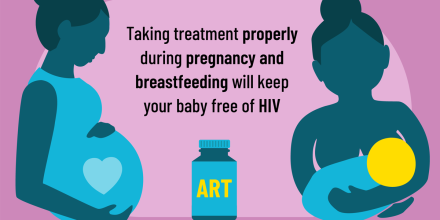
In many communities, women living with HIV navigate additional expectations that men may not face. Adaeze points to motherhood as one example. Exclusive breastfeeding for the first six months can be recommended in certain contexts for women living with HIV who are on treatment. But in extended families where mothers-in-law and relatives closely observe childcare practices, questions can quickly arise.
“People start asking why the baby is not being given anything else,” she says. Those questions can create pressure for women who may not be ready to disclose their status to family members. These everyday moments reveal how gender roles and cultural expectations intersect with HIV.
When asked what strength means to her today, Adaeze doesn’t talk about enduring hardship. Instead, she talks about knowledge. “The medication is what gives me strength,” she says.
Knowing that treatment works and that viral suppression prevents transmission changes how she sees the future. She has seen examples of HIV-positive women marrying HIV-negative partners and having HIV-negative children. “That alone gives me strength,” she says. “It’s just for them to understand how it works.” Strength, in this sense, is not about fighting HIV every day. It is about understanding it.
Adaeze does not carry a formal leadership title, but she has already become a source of guidance for others. When she heard that a friend had stopped taking her HIV medication, she decided to visit her. By the time Adaeze arrived, the situation had become severe. Her friend had developed complications and lost her sight. The conversation was difficult. “She didn’t want to hear me at first,” Adaeze says.
But two months later, her friend called her back and restarted treatment. She has now been taking medication consistently for two years. “That is my leadership,” Adaeze says. “Nobody made me a leader. It is what I believe.” For Adaeze, leadership comes from lived experience — sharing what she has learned and helping others avoid the same mistakes.
As the world marks International Women’s Month, conversations about women’s leadership often focus on politics, business or activism. But leadership also shows up quietly — in everyday decisions about health, relationships and community. Adaeze believes the message to women living with HIV should be simple. “We are women,” she says. Not “different women”. Not “strong despite HIV”. Just women.
In her view, autonomy for women living with HIV today means living full, ordinary lives — building businesses, forming relationships and supporting each other. “They are doing well,” she says. “They are getting married, opening businesses, sending invitations in the group chat.” For Adaeze, the future is not defined by diagnosis.
Adaeze is currently working towards furthering her education. She studied economics and hopes to pursue postgraduate studies outside Nigeria. HIV, she says, delayed some opportunities, but it has not ended them. “I achieved what I am today,” she says. “And I’m still achieving more.”
For young women who have just received an HIV diagnosis and feel their future has collapsed, Adaeze does not offer complicated advice. She offers perspective. Her mother died without ever knowing she was living with HIV. Among her siblings, three are HIV-positive and two are HIV-negative. Adaeze grew up taking treatment, finished university and continues to build her future.
Her message to other young women who feel their future has collapsed is simple:
“Look at me.”
Keep up-to-date with all our latest news stories and blogs by signing up to the Be in the KNOW news digest.